Director of Commencement, CU Boulder
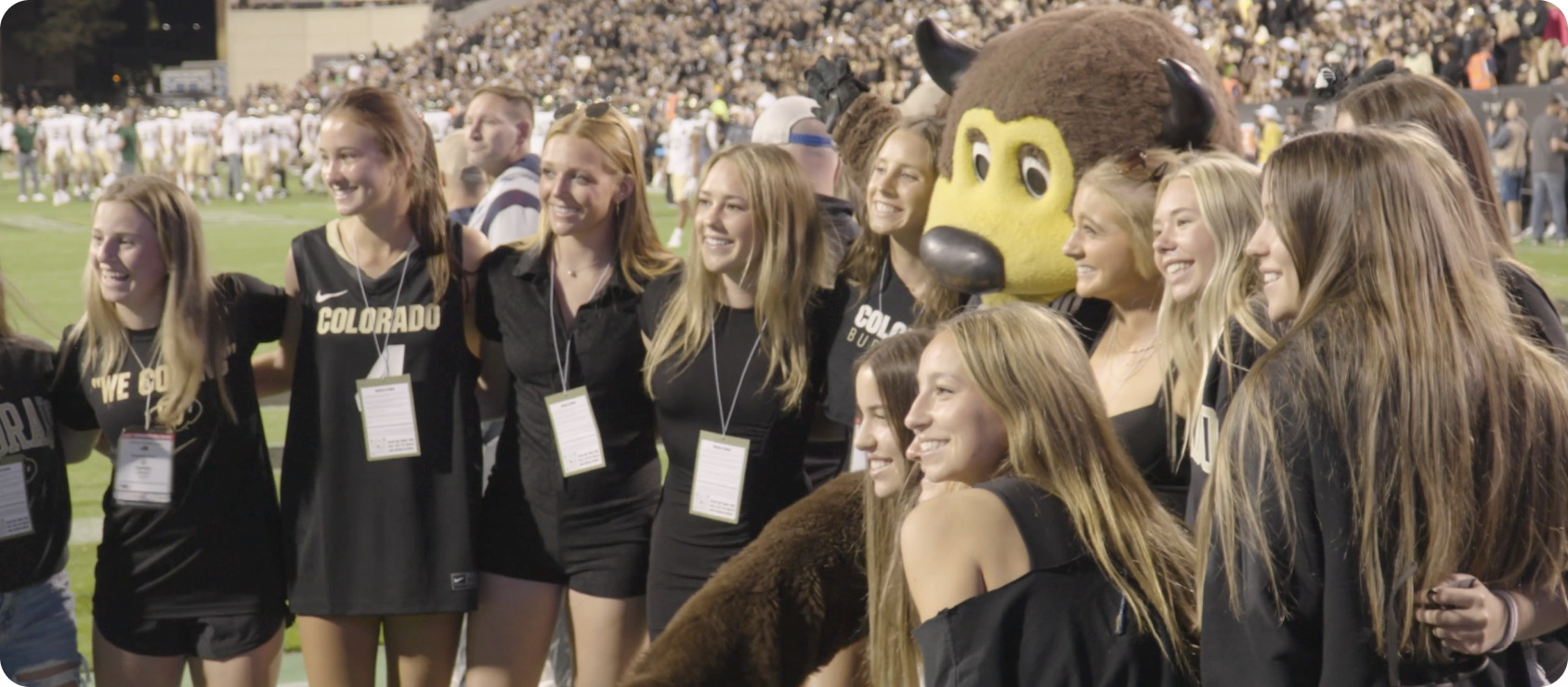
A film for forty thousand people, once a year
Every spring, CU Boulder fills Folsom Field and plays one video to the graduating class. I have directed it three years running. I write it, film it, cut it, and get it approved by the Chancellor before it goes on the stadium Jumbotron.
My Role
What I handle
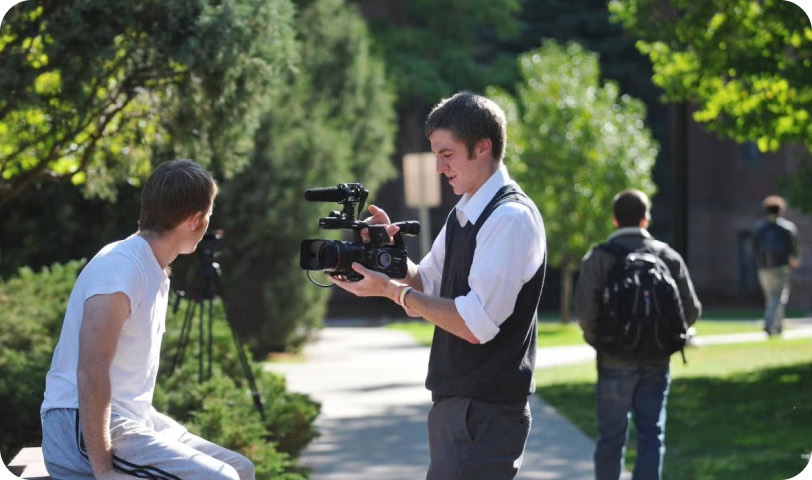
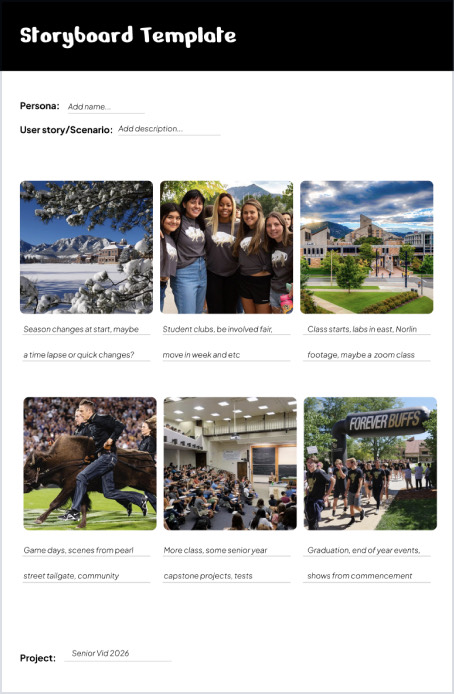
Concept and theme, the script and student narration, the shot list and storyboard, five months of filming, the edit, and the approval process. I lead a team of two and work with four campus groups. There is no professional help. If I don’t come through, neither does the video.

The Challenge
Four problems, every single year
The brief resets every spring, but the same four problems show up each time.
01
Scale
Thousands of graduates, and the film still has to feel like it is personal.
02
Narrative
Scattered footage from a whole year has to become one clear story.
03
Tone
It has to entertain a stadium and still be meaningful.
04
Sources
Multiple shooters, styles, and campus film banks, cut into one voice.
The Pipeline
Nine months, three phases
The film is a production schedule before it is a video. Pre-production runs through the fall, filming takes five months across campus events, and the last stretch is revisions and approval.
PHASE 01
Pre-production
Theme, photo shortlist, script, shot list, storyboard.
PHASE 02
Production
Five months of filming across events, plus campus film banks.
PHASE 03
Post & approval
Rough cuts, revision rounds, Chancellor sign-off, premiere.
Finding the Story
Every year needs a reason to exist
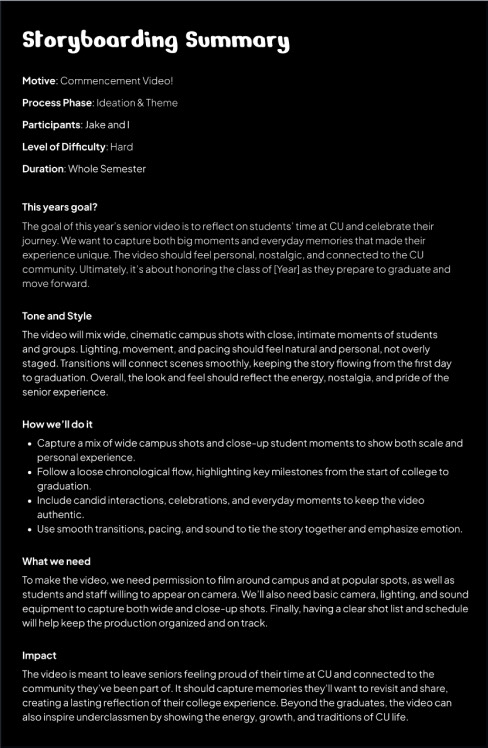
The theme comes first, and it comes from whatever actually defined the year. A campus-wide moment, a hire everyone was talking about, something nobody will forget. I put a photo shortlist together around it and take it to the Chancellor before I write a single line.
Production
Five months of footage, one voice
Filming runs alongside the school year, so I am scheduling around classes, mine and my assistant’s. Some footage I shoot myself, some comes from film banks across campus. Different people, different styles, and all of it has to end up sounding like one film.
Getting to Yes
The edit is only half the job
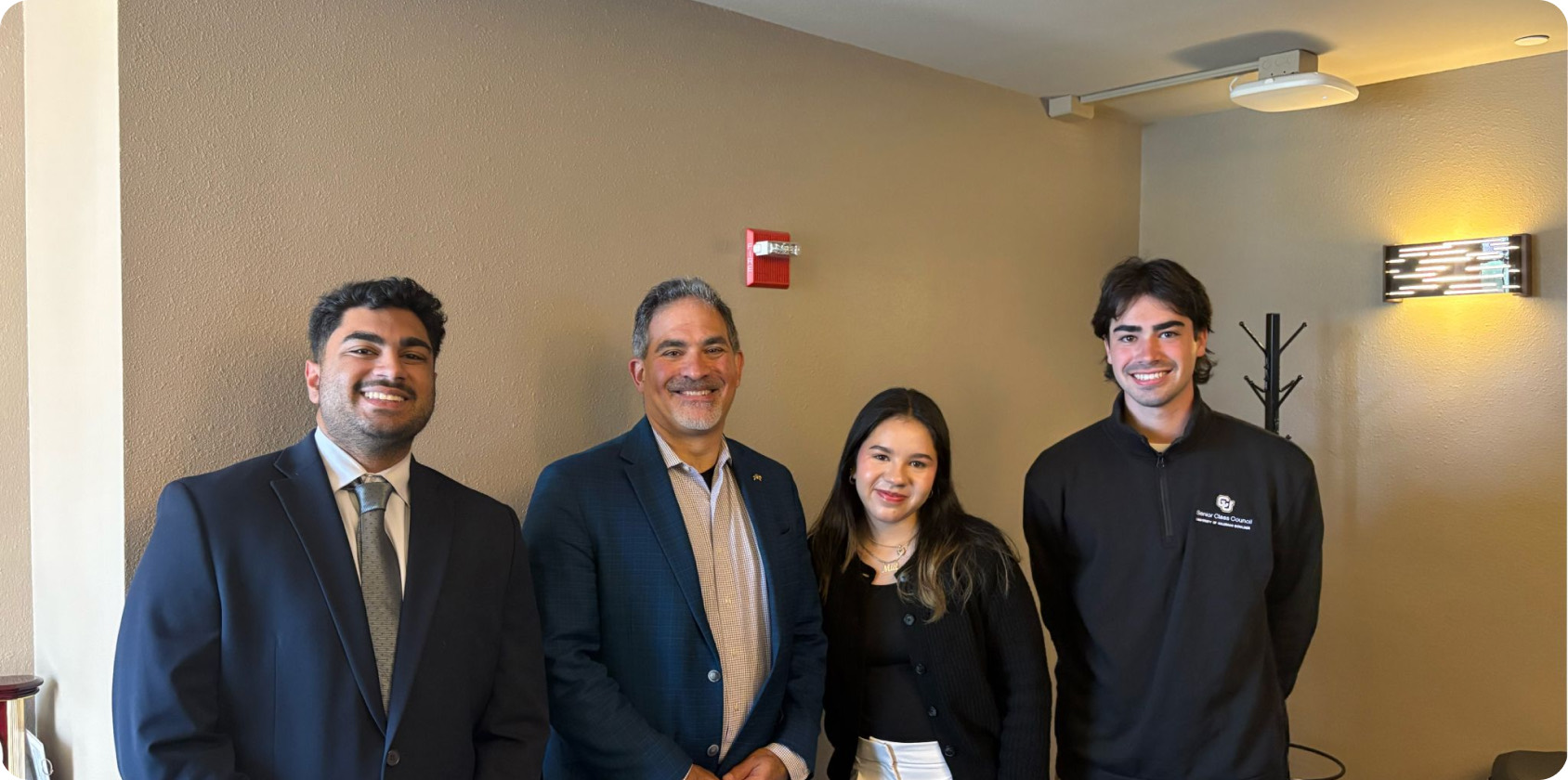
Every cut goes to Senior Class Council, then to the Chancellor’s office. Multiple rounds of revisions, each one tightening the pacing and pulling the story back toward the theme we approved. Learning to take that feedback without losing the film is the part I use everywhere else.
Three Years In
The same brief, three different films
Directing it three times is a system. Each year I kept what worked, cut what did not, and left the next version a better starting point than I got.
By The Numbers
Three years, counted
“Cole has been the primary visionary of the Senior Video showed during the CU Boulder Spring Commencement Ceremony.”
– Shane GuinanAssistant Director of Student Engagement
Center for Student Involvement · CU Boulder
Takeaways
What three commencements taught me.
Running a nine-month project taught me to set goals, delegate, and protect a deadline without dropping the quality. Storyboarding taught me how to turn an idea in my head into something a team can actually go shoot. And every year something breaks. A file, a schedule, a note two days before delivery. Staying calm and re-planning fast ended up being the most useful thing I picked up.